

Goodness Drinks Its Own Poison When It Asks for Applause
- Feroz Anka
- May 23
- 8 min read

Goodness does not die when no one sees it.
It dies when it cannot live unless someone sees it.
This is one of the most delicate deaths inside The Dictionary of Self-Extinguished Concepts: a concept that once belonged to the quiet relief of another human being begins to ask for witness, angle, applause, evidence, reach, and recognition.
At first, goodness is simple.
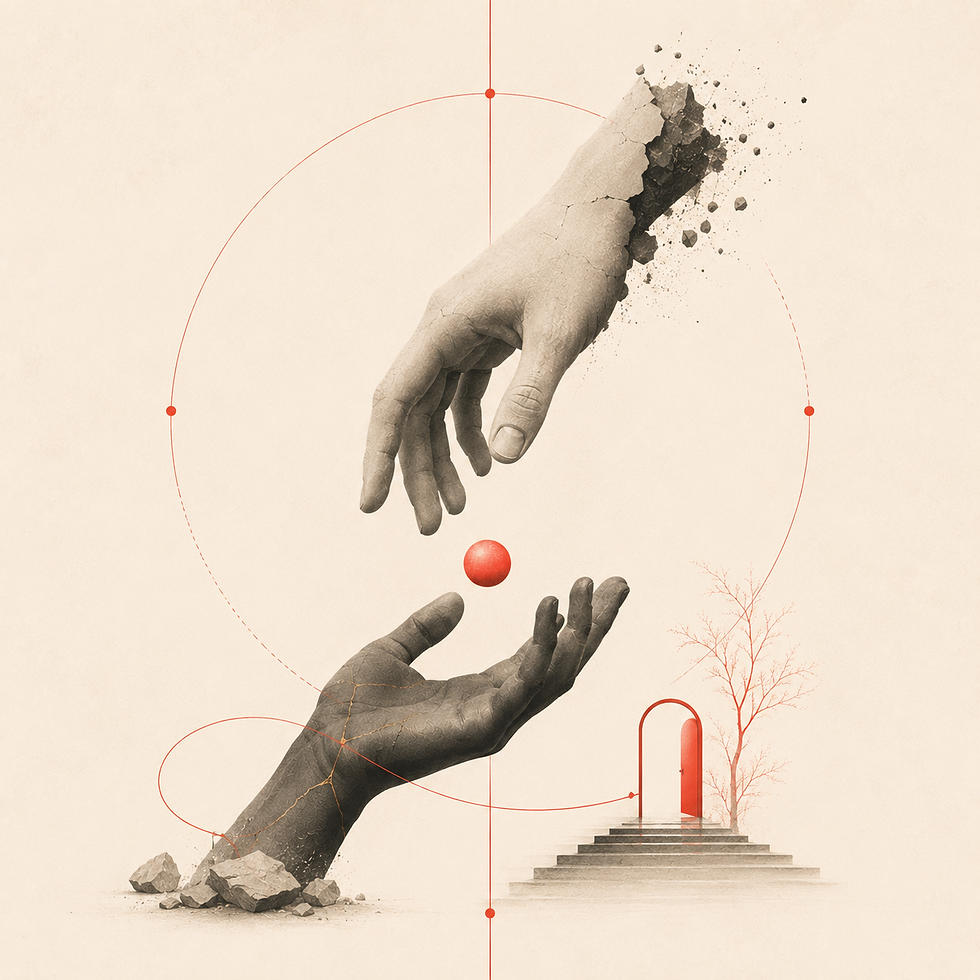
A hand extends.
A burden becomes lighter.
A door is opened.
A name is protected.
A hunger is answered.
A wound is not made into scenery.
But then the camera arrives.
The act is adjusted.
The receiver is framed.
The giver becomes visible.
Pain becomes background.
Mercy becomes content.
And goodness begins to drink its own poison.
When Help Chooses Its Angle Before Its Act
The corruption begins when help asks how it will look before asking what it will heal.
A person is hungry, but the frame must be arranged.
A wound is present, but the caption must be ready.
A hand is extended, but another hand is already recording.
A gift is given, but the logo stands too close to the pain.
This is not goodness.
It is goodness being converted into evidence.
The act may still help. The bread may still reach the table. The coat may still warm the body. The money may still enter the account. Visibility is not always evil; public help can organize, inspire, mobilize, and invite others into care.
But something becomes dangerous when the dignity of the receiver is made secondary to the image of the giver.
When the person helped becomes a symbol.
When their need becomes a background.
When the wound is used to brighten the face of the one who stands beside it.
At that moment, goodness begins to leave the act.
And performance enters.
The Second Meaning of Sharing
There was once another meaning of sharing.
To share meant to carry a portion.
A meal.
A burden.
A sorrow.
A silence.
A responsibility.
A difficult hour.
Sharing was not only transmission.
It was participation.
Now the word often means movement without weight. A story is shared. A tragedy is shared. A photo is shared. A gesture is shared. A wound is shared until it travels far, but not always deep.
The digital share shines on the surface.
But who carries the share?
This is the same wound opened in Empathy Is Not an Icon: Why Endless Scrolling Makes Feeling Tired, where feeling is called back from reaction and returned to the human face.
A heart icon can imitate a pulse.
But it cannot carry a shoulder.
A share button can move an image.
But it cannot sit beside a person.
Goodness begins to decay when sharing becomes circulation instead of responsibility.
Why Applause Corrupts Intention
Applause is not always wrong.
A public act may deserve gratitude. A visible gesture may encourage others. A named effort may create trust. A shared story may open more doors for those in need.
But applause becomes poison when the act starts needing it in order to exist.
Then goodness no longer asks: did another person breathe easier?
It asks: was I seen?
This is the hidden shift.
The receiver becomes less central.
The audience becomes more important.
The act becomes a mirror.
The giver begins to look at the self through the wound of another.
And the word goodness loses weight.
It still appears noble. It still speaks the language of care. It still wears the clothing of mercy.
But its inner direction has changed.
Goodness is no longer moving toward the other.
It is returning to the image of the self.
Do you want to help, or to be seen helping?
The Dignity of the Receiver
Every act of help touches dignity.
This is why goodness must be careful.
The person receiving help is not an accessory to the moral beauty of the giver. They are not proof. They are not material. They are not scenery for compassion.
They are a human being standing at a difficult threshold.
To help someone is to enter that threshold with humility.
Too much visibility can humiliate the receiver. Too much explanation can turn their need into spectacle. Too much branding can place the giver’s name where the receiver’s dignity should have been protected.
A good act should ask:
Does this preserve the other person’s face?
Does this protect their name?
Does this make their burden lighter without making their exposure heavier?
Does this help, or does it display help?
The quietest goodness often understands that the receiver must not be made smaller by the act that claims to serve them.
The Erased Name on the Envelope
There is a form of goodness that removes its own signature.
A small package left quietly at a door.
An envelope without a name.
A kitchen where steam asks for no caption.
A hand with flour in its cuticles holding a ladle.
A debt paid without turning the debtor into a witness of shame.
A call made before the wound becomes public.
This is the unregistered life of goodness.
It does not glitter.
It works.
It does not ask whether the world saw.
It asks whether the person could stand a little more easily afterward.
There is a deep mercy in the erased name. Not because identity is always wrong, but because some acts grow purer when the giver withdraws.
Goodness grows most where the name withdraws.
Not because the name is evil.
Because the other person’s relief matters more.
The Difference Between Display and Care
Display asks for visibility.
Care asks for usefulness.
Display seeks the right angle.
Care seeks the right distance.
Display turns pain into evidence.
Care protects pain from becoming material.
Display asks, “How will this appear?”
Care asks, “What is needed here?”
This difference is subtle but decisive.
A displayed act may still produce relief. But when display becomes the center, care becomes secondary. The act bends toward the witness. The receiver becomes part of the composition.
Goodness cannot survive long when it becomes a composition.
It needs contact.
It needs humility.
It needs the ability to do what is necessary without making the wound serve the image.
This is why Every Concept Dies in the Wrong Hands belongs beside this reflection: the same word can become bread in one hand and a blade in another.
Goodness depends not only on the act.
It depends on the intention carrying it.
Goodness with a QR Code
There is a particular sadness in goodness that becomes trackable before it becomes tender.
Measured reach.
Recorded impact.
Visible proof.
Brand placement.
Public gratitude.
Emotional conversion.
Again, not every record is wrong. Some forms of accountability are necessary. Some institutions must show where help went. Some public campaigns need transparency.
But when the record begins to feed the ego more than the hungry, the word goodness begins to rot from within.
What was trackable enters competition.
What enters competition begins to compare.
What compares begins to seek advantage.
And what seeks advantage can no longer remain simple.
Goodness becomes dangerous when it forgets the person and starts managing its own image.
The Silent Tribunal
A silent tribunal stands inside every act of help.
It asks questions no camera can answer.
Would your goodness still exist if no one could know?
Does your act make another person breathe easier, or does it make your image brighter?
Are you protecting the receiver’s dignity, or borrowing their wound for your own moral reflection?
Did you extend your hand because care required it, or because visibility rewarded it?
These questions are not accusations.
They are purification.
Goodness must pass through them in order to remain alive. Because the ego can wear the clothing of mercy very easily. It can hide inside virtue. It can use the language of service while secretly asking to be admired.
The most dangerous form of vanity is the one that calls itself compassion.
When Goodness Becomes a Commodity
A commodity must be visible.
It must be packaged.
Measured.
Promoted.
Recognized.
Repeated.
Placed into circulation.
But goodness cannot live entirely inside circulation.
It needs secrecy sometimes.
It needs slowness.
It needs privacy.
It needs the silence where intention can be examined before the act enters the world.
When goodness becomes a commodity, its value shifts from relief to appearance. The act is no longer enough. It must be seen, named, counted, polished, and converted into a story.
This is how a living concept becomes self-extinguished.
Not because it was false from the beginning.
But because it entered the wrong economy.
The economy of applause.
The Camera and the Hand
The hand and the camera often want different things.
The hand wants to help.
The camera wants to preserve proof.
The hand wants contact.
The camera wants visibility.
The hand can disappear after the act.
The camera wants the act to remain attached to the giver.
This does not mean every image of help is corrupt. But every image of help must be questioned. Who is protected by this image? Who is exposed? Who becomes larger? Who becomes smaller? What is being served: relief, or reputation?
A camera can bear witness.
But it can also consume.
Goodness must know the difference.
The hand must not forget why it was extended.
Returning Goodness to Life
To rescue goodness, we do not need louder declarations of virtue.
We need quieter acts with more weight.
A door opened without announcement.
A meal carried without witness.
A name protected without reward.
A burden shared without caption.
A hand extended without converting the other person into proof.
Goodness returns when it no longer needs to become beautiful in public.
It returns when it becomes useful again.
It returns when the receiver’s breathing matters more than the giver’s image.
It returns when help does not make the helped person pay with dignity.
It returns when the name withdraws.
This is not the disappearance of goodness.
It is its purification.
Goodness and Silence
Goodness needs silence.
Not always, but often.
Silence protects the act from becoming spectacle. It allows intention to remain near the human being rather than the audience. It gives the receiver space to remain a person rather than becoming a visible symbol of need.
This is where The Ethics of Silence: Why Not Saying Can Be a Form of Truth opens the deeper discipline beneath goodness: not every truth, not every act, not every mercy deserves immediate exposure.
Some things become more truthful when they are not announced.
Some help becomes more merciful when it does not demand to be remembered.
Some acts are most alive when they leave no public trace.
The good that makes another person breathe easier does not always need a witness.
Sometimes the eased breath is the witness.
The Quiet Place Where Another Person Breathes Easier
True goodness is not theatrical.
It is architectural.
It changes the weight of a room.
Someone is less hungry.
Someone is less ashamed.
Someone is less alone.
Someone is less afraid.
Someone can sleep.
Someone can stand.
Someone can continue.
That is enough.
Goodness does not need to become a monument to the one who performed it. It does not need to be framed as evidence of moral beauty. It does not need to be turned into a mirror.
It should leave the other person with more dignity than before.
If it does not, something in the act must be examined.
The Word That Must Become Difficult Again
The word goodness has become too easy.
Too easily used.
Too easily displayed.
Too easily claimed.
Too easily attached to images, campaigns, identities, and narratives.
It must become difficult again.
Not difficult in the sense of rare.
Difficult in the sense of responsible.
A person should hesitate before using the word. Not out of fear, but out of reverence. Because goodness is not a costume. It is not a caption. It is not a stage.
It is the quiet labor of making another person’s burden lighter without making their wound serve your image.
Maybe this is the only way the word can return.
With less applause.
And more mercy.
Continue the Path
Read The Dictionary of Self-Extinguished Concepts — where goodness is rescued from display and returned to the quiet place where another person breathes easier.
You may also continue with Empathy Is Not an Icon: Why Endless Scrolling Makes Feeling Tired, where feeling is called back from reaction and returned to the human face, or Every Concept Dies in the Wrong Hands, where language becomes an inner tribunal of intention.
For a deeper ethical continuation, read The Ethics of Silence: Why Not Saying Can Be a Form of Truth — where not saying becomes the discipline of protecting what must not be wounded by exposure.
Maybe goodness returns when the camera turns away and the hand finally remembers why it was extended.


Comments