

The Ethics of Silence: Why Not Saying Can Be a Form of Truth

Not every truth deserves to be spoken the moment it is known.
Some truths need time before they can enter the mouth. Some wounds need distance before they can bear explanation. Some meanings are harmed not by silence, but by the haste of being said too early.
We often treat silence as absence. As fear. As avoidance. As weakness. As an empty place waiting for speech to complete it.
But silence is not always empty.
Sometimes silence is care before language.
Sometimes it is truth gathering weight.
Sometimes it is the last shelter of a meaning not yet ready to become sound.
This is one of the central thresholds of Before Sentences: silence not as emptiness, but as the discipline of knowing what must not be wounded by speech.
To be able to speak is power.
To be able to remain silent is ethics.
Silence Is Not Absence
Silence is not merely the lack of sound.
It can have weight.
It can have texture.
It can have intention.
There is the silence of abandonment, yes. The silence that refuses responsibility. The silence that hides behind politeness while truth bleeds in the room.
But there is another silence.
A silence that protects.
A silence that waits.
A silence that does not rush to turn another person’s pain into material for a sentence.
This silence is not passive. It is a form of attention.
It listens before arranging.
It witnesses before judging.
It holds before naming.
In a world that rewards speed, immediate reaction, and constant explanation, silence becomes one of the few places where meaning can still breathe without being consumed.
Why Speech Has a Cost
Every word has a price.
To speak is to remove something from silence and expose it to interpretation. To name is to draw a line around what was once wider. To explain is to choose one form of meaning while leaving others behind.
A word can heal.
But it can also reduce.
A sentence can clarify.
But it can also close.
An explanation can help someone understand.
But it can also take ownership of what should have remained tender, private, unfinished, or still becoming.
This is why speech requires conscience.
A careless word does not merely vanish after being spoken. It leaves a trace. It changes the room. It enters another person’s memory. It may become a burden, a wound, a verdict, or a shelter.
The mouth is not only an instrument.
It is a threshold.
And not every meaning should be carried across it at once.
The Difference Between Hiding and Protecting
There is a difference between hiding truth and protecting it.
Hiding avoids responsibility.
Protecting honors timing.
Hiding says: I do not want to face this.
Protecting says: this is not ready to be carried by speech.
Hiding abandons the other person in uncertainty.
Protecting prevents the truth from being damaged by haste, ego, exposure, or performance.
A wound explained too early can become wounded again. A fragile feeling named too loudly can lose the quiet space it needed to unfold. A private truth repeated in the wrong room may become less true because it has been handled without reverence.
This is why silence must be examined carefully.
Not all silence is noble.
But not all speech is honest.
Sometimes a sentence is spoken not because truth needs it, but because the ego wants relief. Sometimes we speak to end our own discomfort, to appear clear, to seem brave, to occupy the room, to prove that we have understood.
But truth does not always ask for display.
Sometimes it asks to be guarded.
Knowing Without Displaying
Modern life often confuses expression with sincerity.
If something is felt, it must be shared.
If something is known, it must be stated.
If something is painful, it must be explained.
If something is meaningful, it must be made visible.
But not every inner movement becomes truer when it is displayed.
Some knowledge becomes shallow when it is immediately performed. Some grief becomes theatrical when it is forced into form too quickly. Some love becomes smaller when it rushes to prove itself.
To know something without displaying it can be a mature act.
Not because truth should be hidden.
But because truth should not always be converted into a stage.
This question continues from Before Words: Why Some Truths Exist Before Language, where meaning exists before the sentence arrives, before truth is pressed into the narrow corridor of language.
There is a kind of knowing that does not need immediate speech.
A gaze can know.
A hand can know.
A body can know.
A silence can know.
The sentence is not always the first witness.
Sometimes it is the last.
Timing, Distance, and Intention
Silence becomes ethical when it understands three things: timing, distance, and intention.
Timing asks: is this the right hour for the truth?
Some truths spoken too early burn both the speaker and the listener. They may be accurate, but they are not yet bearable. A truth can be correct and still arrive without mercy.
Distance asks: do I have the right to speak from this closeness?
Not every closeness gives permission. Not every knowledge gives authority. Some things may be seen, but not touched. Some truths may be understood, but not claimed.
Intention asks: why do I want to say this?
Is the sentence serving truth, or is it serving my image of truthfulness? Is it healing, or is it proving? Is it necessary, or is it only my discomfort searching for release?
These questions matter because words carry more than meaning.
They carry motive.
And motive changes the weight of speech.
When Silence Becomes Compassion
There are moments when compassion does not arrive as advice.
It arrives as restraint.
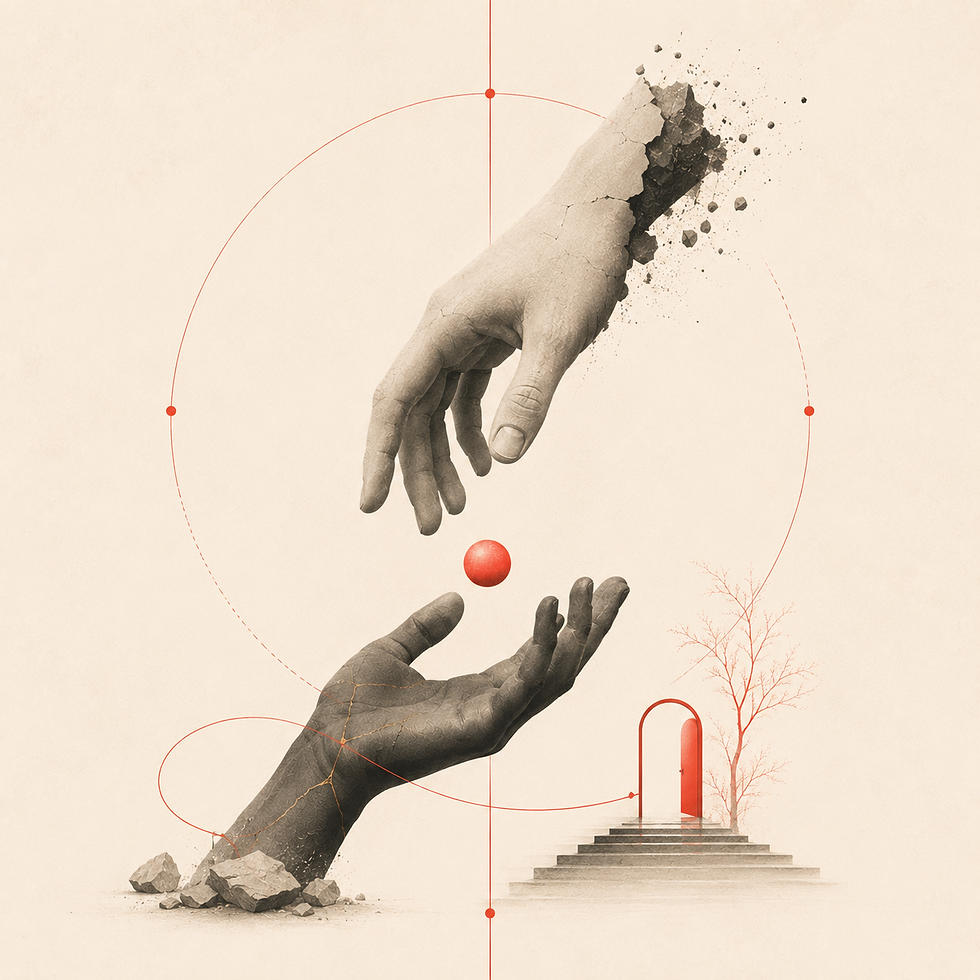
A person sits beside another and does not rush to explain the pain. A hand stays near without taking control. A room becomes gentler because nobody fills it with unnecessary sentences.
There are griefs that cannot be comforted by language at first.
There are apologies that must begin in the eyes before they reach the mouth.
There are wounds that need presence before interpretation.
In such moments, silence is not emptiness. It is a form of shelter.
It says:
I am here.
I will not make your pain smaller so I can understand it faster.
I will not turn your wound into my sentence.
I will not fill the room just because I am afraid of its depth.
This is where silence becomes ethical.
Not because it avoids speech forever, but because it allows speech to arrive without violence.
The Gaze Before the Sentence
Before words, there is often a gaze.
A gaze can ask.
A gaze can apologize.
A gaze can protect.
A gaze can withdraw.
A gaze can remain.
There are moments when the eyes say what the mouth would damage.
The gaze does not explain; it witnesses. It does not always define; it sometimes gives space. It can carry a kind of attention that speech would make too heavy.
A sentence may become a verdict.
A gaze may remain a witness.
This distinction matters.
A verdict closes the matter.
A witness remains beside it.
Perhaps this is why some truths feel safer in silence. They are not being denied. They are being accompanied.
The sentence has not arrived because the gaze is still doing its work.
Are You Speaking Because Truth Needs You?
Silence asks difficult questions.
Are you speaking because truth needs you, or because your ego wants a stage?
What would remain if you reduced your share in the sentence?
Can not saying something sometimes be the most truthful act?
These questions do not ask us to become mute. They ask us to become responsible.
Speech is not the enemy.
Careless speech is.
Silence is not automatically wisdom.
But speech without inward examination is often noise wearing the costume of clarity.
The ethical question is not simply: should I speak?
The deeper question is: what will my speech do?
Will it open a door or close one?
Will it carry the truth or make it smaller?
Will it protect the other person’s dignity or expose it for my own relief?
Will it witness, or will it judge?
Every Word Leaves a Trace
A spoken word does not end at the mouth.
It travels.
It enters another person’s silence. It touches memory. It alters the atmosphere. It may remain long after the speaker has forgotten it.
This is why language has a moral dimension.
A harsh word may seem brief, but it can live for years in the person who received it. A gentle word may seem small, but it can become a place of return. A withheld word may protect, or it may abandon. A delayed word may mature, or it may decay.
Nothing in language is neutral.
Even silence is not neutral.
This is why Every Concept Dies in the Wrong Hands continues the same ethical question in another direction: language is not decoration, but a trust; every word asks whether we were worthy of carrying it.
Before speech becomes clean, intention must become clean.
Before a sentence becomes true, the mouth must become responsible for what it releases.
The Wisdom of Saying Less
To say less is not always to know less.
Sometimes saying less means knowing the limit of the sentence.
A mature silence does not come from emptiness. It comes from discernment. It knows that some meanings collapse when overexplained. Some truths become weaker when defended too loudly. Some love becomes more trustworthy when it stops announcing itself.
The world is full of speech that wants to prove.
But wisdom often arrives without performance.
A quiet answer.
A delayed sentence.
A softened tone.
A word withheld before it becomes a wound.
A truth carried until the hour becomes merciful.
This is not the silence of fear.
It is the silence of proportion.
The Post-Language Mind
There is a stage of maturity where the mind no longer needs to turn every truth into speech.
It does not reject language.
It simply learns where language belongs.
Not every perception must become thought. Not every thought must become a sentence. Not every sentence must enter the room.
This is the threshold of The Post-Language Mind: Knowing Without Thinking: knowing without immediately explaining, seeing without immediately naming, understanding without immediately occupying the silence.
A mature mind can allow truth to stand.
It does not rush to place a frame around it.
It does not need to prove that it has seen.
It can remain near the truth without claiming ownership over it.
The Withdrawn Sentence
Sometimes the most ethical sentence is the one that does not arrive.
The sentence held back before it becomes cruelty.
The judgment withdrawn before it becomes identity.
The explanation delayed before it harms the wound.
The truth softened before it becomes a weapon.
There is a discipline in this.
Not repression.
Discipline.
The mouth waits because the heart has understood the cost.
And when speech finally comes, it comes differently.
Less as a verdict.
More as witness.
Less as possession.
More as offering.
Less as noise.
More as breath.
Continue the Path
Continue into Before Sentences — where silence is not absence, but the discipline of knowing what must not be wounded by speech.
You may also continue with Before Words: Why Some Truths Exist Before Language, where meaning exists before language arrives, or The Post-Language Mind: Knowing Without Thinking, where maturity begins when the mind no longer needs to turn every truth into speech.
For a sharper ethical continuation, read Every Concept Dies in the Wrong Hands — where language becomes an inner tribunal, and every word asks whether we were worthy of carrying it.
Maybe wisdom is not the possession of the right sentence, but the maturity to know when the sentence should not arrive.


Comments