

The Last Breath of Words: Why Meaning Dies from Overuse

Some words do not die in silence.
They die from being spoken too often without being carried.
A word can remain everywhere and still lose its soul. It can appear in speeches, captions, declarations, campaigns, prayers, apologies, slogans, profiles, and promises — yet no longer touch anything real.
This is one of the strange tragedies of language.
A word does not always disappear when it dies.
Sometimes it stays.
It keeps circulating.
It keeps being repeated.
It keeps appearing on screens, lips, banners, and beautiful sentences.
But inside, something has stopped breathing.
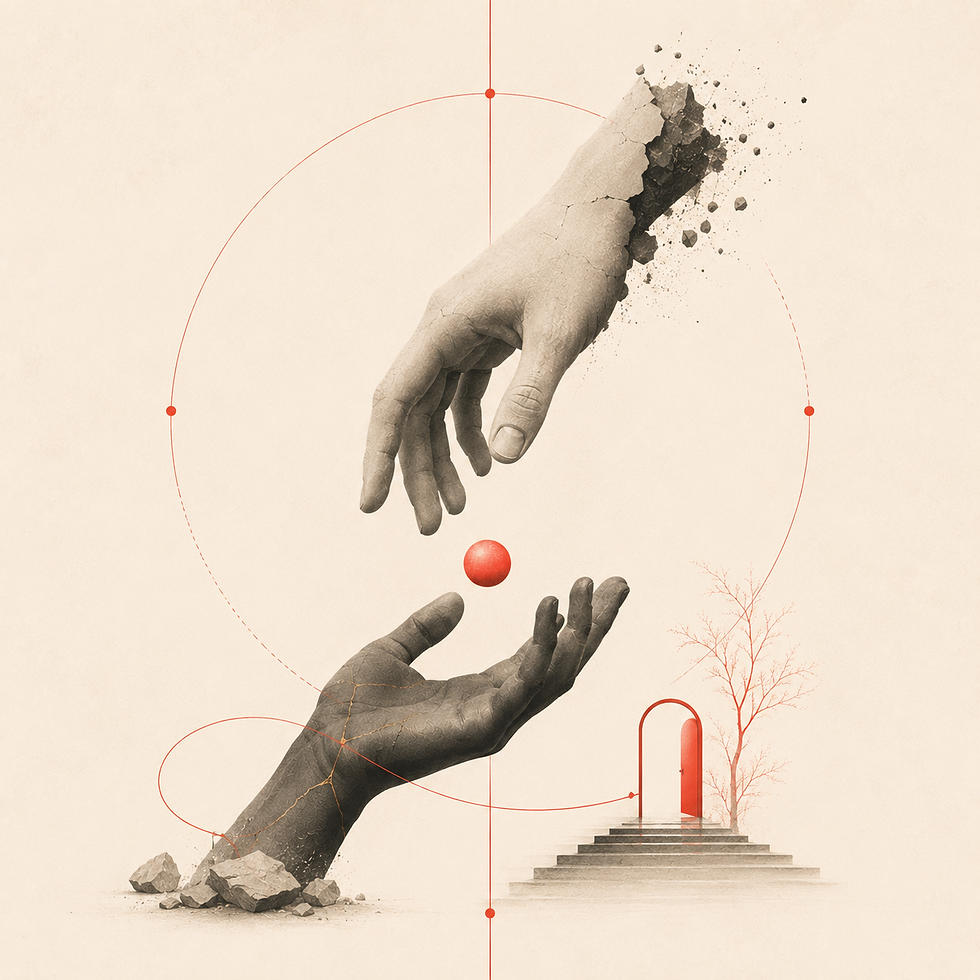
This is the opening wound of The Dictionary of Self-Extinguished Concepts: meaning did not vanish; it was buried alive in words that were used too often, too lightly, and in the wrong mouths.
The Weary Exhale of Language
Language gets tired.
Not because words are weak.
But because human beings often ask words to carry what they themselves refuse to carry.
We say love without tenderness.
Truth without humility.
Freedom without direction.
Goodness without sacrifice.
Justice without a face.
Apology without repentance.
Hope without patience.
The word leaves the mouth, but the body does not follow.
And when the word is separated from action, it begins to lose weight.
A sentence may sound complete. It may be polished, impressive, morally correct, emotionally shaped. But if there is no lived intention behind it, the sentence becomes a shell.
The throat vibrates.
The heart does not.
This is how language begins to exhale wearily. Not through silence, but through too much speech without enough presence.
Why Repetition Can Empty Meaning
Repetition does not always deepen a word.
Sometimes it hollows it.
A word repeated with reverence may grow stronger. A prayer repeated with presence may deepen. A name spoken with love may become warmer over time.
But repetition without responsibility erodes meaning.
It turns the word into a surface.
Visible, but thin.
Recognizable, but weightless.
Useful, but no longer alive.
The danger is not repetition itself.
The danger is repetition without carrying.
A word dies when it becomes easier to say than to live.
This is why the death of meaning is often quiet. No one notices it immediately. The word still appears. It still sounds familiar. It still performs its role in conversation.
But something no longer reaches the listener.
The sound arrives.
The truth does not.
Words That Shine but No Longer Carry Weight
Some words become too bright.
They are polished by excessive use until nothing can grip them anymore. They shine on the surface, but no longer sink into the human being.
Love becomes an aesthetic.
Truth becomes a flag.
Freedom becomes a package.
Empathy becomes an icon.
Goodness becomes a performance.
Sincerity becomes a pose.
Friendship becomes a number.
Knowledge becomes smoke.
The word remains visible.
But visibility is not vitality.
A concept can be everywhere and still be dead.
This is the strange condition of the modern age: it does not always destroy words by banning them. It destroys them by overexposing them. It turns them into content. It keeps them moving so quickly that they never have time to regain depth.
The same wound appears in Every Concept Dies in the Wrong Hands, where meaning depends not only on definition, but on the mouth, hand, intention, and life that carry the word.
A word is not saved by being defended loudly.
Sometimes it is saved by being used less.
And carried more.
The Cemetery Inside the Human Mouth
The cemetery of meaning is not only in old books, forgotten dictionaries, or abandoned languages.
It is often inside the human mouth.
That is where a word can be buried alive.
Not by silence.
By misuse.
By vanity.
By speed.
By spectacle.
By laziness.
By slogans.
By repetition without inward weight.
The mouth can become a place where words are released before they have been lived. Where sacred concepts are chewed until they no longer have taste. Where the same phrases are repeated so often that they stop touching the person who says them.
Which word have you repeated until it no longer touched you?
Which concept do you use most easily but carry least deeply?
These are not linguistic questions only.
They are moral questions.
Because language does not decay alone. When a word loses weight, the human being often loses something with it.
Love: When the Word Is Chewed Too Long
Love may die not because people stop speaking of it, but because they speak of it everywhere without making room for it anywhere.
A word like love cannot survive as decoration.
It requires space.
Attention.
Restraint.
Presence.
A silence that does not abandon.
A hand that knows when not to possess.
But when love is repeated as a caption, a reflex, a formula, a beautiful sound without cost, it begins to thin.
It becomes easier to say than to practice.
The word remains.
But the threshold disappears.
Love is not the breaking of every distance. Sometimes love is the right distance. Sometimes it is the chair pulled closer. Sometimes it is the word withheld so the other person can breathe. Sometimes it is the gaze that says what the mouth would make smaller.
When the word love becomes louder than the care it carries, meaning begins to leave.
Truth: When Everyone Claims It
Truth does not die only when it is denied.
It can also die when everyone claims it.
When truth becomes “my truth,” “our truth,” “the only truth,” “the truth they fear,” it may stop being a light and become a weapon of belonging.
Truth then no longer burns the mask.
It becomes attached to the mask.
It is waved like a flag, repeated into microphones, sharpened into accusation, dressed in certainty, sold as identity.
But truth is not private property.
Truth cannot be owned by the loudest voice. It cannot be reduced to allegiance. It does not become truer because it is repeated with force.
A truth that is carried with humility may illuminate.
A truth used for domination becomes another form of darkness.
This is where the ethics of language becomes unavoidable.
The question is not only whether the word is correct.
The question is whether the hand carrying it is clean enough.
Freedom: When Choice Replaces Direction
Freedom is another word that has been exhausted by circulation.
It appears everywhere.
Freedom to choose.
Freedom to customize.
Freedom to upgrade.
Freedom to subscribe.
Freedom to become anything.
Freedom to consume without limit.
But options are not always freedom.
A person can stand before a thousand choices and still have no direction. A person can customize every wall of the cage and still remain inside it. A person can keep selecting surfaces without ever touching a path.
Freedom dies when it is poisoned by design disguised as choice.
It becomes a package, a slogan, a campaign, a corridor of doors leading to the same room.
This question continues directly in Freedom Was Poisoned by Marketing, where freedom itself is placed on the autopsy table and examined for traces of design.
True freedom may not begin with more options.
It may begin when the noise decreases and direction returns.
Justice: When the File Replaces the Face
Justice also dies when it becomes too clean.
A file can be necessary.
A procedure can protect.
A record can preserve.
But when the file replaces the face, justice begins to lose its pulse.
A human being becomes a case. A wound becomes a number. A child’s shoe disappears beneath the clean surface of administrative order. A trembling voice is converted into a line of documentation.
Justice cannot live only in systems.
It must remain able to see the human being.
When procedure becomes more sacred than the person it was meant to protect, the word justice begins to suffocate beneath its own machinery.
A just language must remember the face.
Not only the rule.
Not only the document.
Not only the formal correctness of the sentence.
When Speech Becomes Circulation, Not Responsibility
Modern speech often behaves like circulation.
Words move quickly. They are posted, shared, quoted, forwarded, repeated, reacted to, reshaped, consumed.
But movement is not meaning.
A word can travel everywhere and arrive nowhere.
The more rapidly language circulates, the more easily responsibility disappears. We begin to confuse expression with depth, reaction with care, visibility with truth.
A word becomes a transaction.
A sentence becomes a signal.
A concept becomes a badge.
This is how meaning is buried alive: not under silence, but under too much movement without enough responsibility.
The same danger appears in The Information Smoke Bomb: How Too Much Information Makes Truth Invisible, where truth does not disappear because it is hidden, but because everything else is made visible at once.
Too much information can bury knowledge.
Too much speech can bury meaning.
Too much repetition can bury the word.
The Discipline of Attention
A word can begin to breathe again.
But not through more noise.
Not through louder definitions.
Not through faster circulation.
Not through another slogan about its importance.
Meaning returns through attention.
By using fewer words with more weight.
By letting a concept rest before repeating it.
By refusing to turn every sacred word into decoration.
By binding speech again to action, intention, patience, and consequence.
A word is revived when it is carried.
Love returns when it makes room.
Truth returns when it accepts humility.
Freedom returns when it finds direction.
Goodness returns when it stops asking for applause.
Empathy returns when the hand leaves the icon and reaches for the door.
Meaning does not need constant exposure.
Sometimes it needs shelter.
Sometimes it needs silence.
Sometimes it needs to be spoken less until it can be lived again.
Can a Word Return?
Can a word return if we reduce our noise around it?
Perhaps.
But return is not automatic.
A word that has been exhausted must pass through silence before it can regain weight. It must be removed from spectacle. It must stop being used as a shortcut. It must be allowed to become difficult again.
Difficult to say lightly.
Difficult to use without consequence.
Difficult to place in the wrong mouth.
A living word should resist misuse.
It should not be too easy to say without trembling a little.
Perhaps this is how meaning begins to breathe again: not by defining the word one more time, but by asking whether we are worthy of using it.
The Necrology of Concepts
A necrology is not only a record of death.
It is also a way of noticing what we failed to protect.
The dead concept asks us what happened.
Who used it too much?
Who used it too lightly?
Who turned it into performance?
Who made it marketable?
Who repeated it without carrying it?
Who defended it so loudly that its inner life disappeared?
The Dictionary of Self-Extinguished Concepts is not interested in defining dead words again as if definitions alone could resurrect them.
It asks for something heavier.
Attention.
A pause before speech.
A recognition that words die when human beings use them to hide their own emptiness.
This is why the book belongs after Before Sentences in the same category path: first, truth is followed back into the silence before language; then, language is examined where meaning has been buried alive.
The First Way to Save a Word
Maybe the first way to save a word is not to define it again.
Maybe it is to stop using it lightly.
To let love become difficult again.
To let truth become humbling again.
To let freedom become directional again.
To let goodness become unseen again.
To let empathy become embodied again.
To let justice become human again.
A word that returns from exhaustion does not return as a slogan.
It returns quietly.
With less shine.
With more weight.
With fewer witnesses.
With deeper roots.
It returns when the mouth becomes careful.
And when the life behind the mouth becomes responsible for what it says.
Continue the Path
Enter The Dictionary of Self-Extinguished Concepts — a conceptual necrology for those who sense that meaning did not disappear; it was buried alive in the wrong mouths.
You may also continue with Every Concept Dies in the Wrong Hands, where language becomes an inner tribunal, or The Information Smoke Bomb: How Too Much Information Makes Truth Invisible, where too much information makes truth harder to see.
For the earlier wound behind this collapse, read When Naming Reduces Reality: The Hidden Cost of Words — where every name reveals something and also takes something away.
Maybe the first way to save a word is not to define it again, but to stop using it lightly.


Comments